
5 Questions to Ask Your Dealer Before Buying Tire
Buying new tire is not just about picking the right size or choosing a brand you recognize. The right tire should match your vehicle, driving habits, budget, winter needs, off-road plans, and wheel setup.
A good tire dealer should be able to explain the difference between options clearly, including what works for daily driving, trail use, winter roads, towing, and mixed-use truck or Jeep builds.
Quick Takeaway
Before buying tire, ask your dealer about:
- Whether your current tire are still right for your vehicle
- Which options match your driving habits and price range
- What good, better, and higher-end choices are available
- What warranty or manufacturer coverage applies
- Whether the tire brand is reputable for your real use
- Whether your wheels, suspension, and tire size work together
At North Shore Offroad, tire selection is part of the bigger build picture. We work with truck, Jeep, 4x4, and overland customers who need tire for everyday driving, winter conditions, off-road trails, and wheel-and-tire upgrades across BC.
Why Asking the Right Tire Questions Matters
Tire affect more than how your vehicle looks. They influence traction, braking, road noise, ride comfort, fuel economy, clearance, load capacity, and off-road capability.
For BC drivers, that can mean choosing tire that handle wet roads, winter conditions, logging roads, gravel, trails, highway use, or a mix of everything. A tire that works well for a daily commuter may not be the right choice for a lifted Jeep. A tire that looks aggressive may not be ideal for long highway driving. A winter tire may be better than an all-terrain tire depending on where and when you drive.
That is why the best question is not just “What tire fit my vehicle?” It is “What tire fit how I actually use my vehicle?”
1. Are My Current Tire Still Right for My Vehicle?
Start by asking whether your current tire still make sense for your vehicle, your driving style, and your plans for the build.
This question is especially important if you have changed, or plan to change, your:
- Wheels
- Suspension
- Lift or levelling kit
- Fender clearance
- Vehicle load
- Driving conditions
- Trail use
- Winter driving needs
Your current tire may have worked well when the vehicle was stock, but that does not mean they are still the right fit after a suspension upgrade, wheel change, or shift toward off-road use.
A good dealer should look at more than tread depth. They should help you think through tire size, load rating, tread pattern, sidewall strength, clearance, and whether the tire suit your vehicle’s current setup.
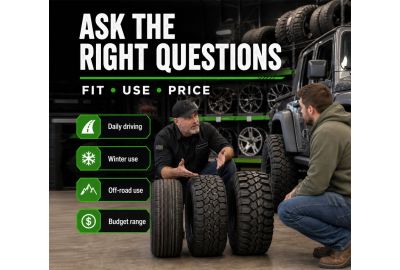
2. Which Tire Match My Driving Habits and Budget?
This is one of the most important questions to ask before buying tire.
Instead of asking for the “best tire,” ask which tire best match your actual driving habits and price range. “Best” depends on how you use your truck, Jeep, or SUV.
For example:
| Driving Style | Tire Priority |
|---|---|
| Mostly city and highway driving | Comfort, tread life, wet traction, low road noise |
| Winter driving | Cold-weather grip, snow traction, braking confidence |
| Gravel roads and light trails | Durability, tread strength, traction off pavement |
| Overlanding and camping trips | Load support, puncture resistance, mixed-terrain performance |
| More aggressive off-road use | Sidewall strength, mud traction, clearance, recovery readiness |
| Daily driving with weekend trails | Balanced all-terrain performance |
Budget matters too. A more expensive tire is not automatically the right choice for every driver, and the cheapest option may not deliver the durability, winter traction, or off-road performance you need.
A good tire recommendation should connect price to real value: how long the tire may last, how it performs in your conditions, and whether it supports the way you use your vehicle.
3. Can You Show Me Three Tire Options at Different Price Levels?
This is a smart question because it makes comparison easier.
Ask your dealer to show you three options in the same general tire category:
- Value option: A practical tire that fits the basic need and budget
- Mid-range option: A stronger balance of performance, comfort, and durability
- Higher-end option: A tire with stronger brand support, advanced tread design, better off-road construction, or added warranty value
This kind of comparison helps you avoid choosing based only on price or brand name.
For example, if you are shopping for all-terrain tire, your dealer should be able to explain how the tread pattern, road noise, snow rating, sidewall construction, and warranty differ between options. If you are shopping for winter tire, the conversation should focus more on cold-weather traction, braking, and confidence in winter conditions.
North Shore Offroad carries a wide range of tire brands, including Bridgestone, BFGoodrich, Continental, Cooper Tires, Falken Tires, Firestone, Kumho Tires, Mickey Thompson, Radar Tires, Toyo Tires, Michelin, General Tires, and more. NSOR also offers wheel options, which matters if you are changing tire size, stance, offset, or overall fitment.
4. What Mileage Warranty or Manufacturer Coverage Comes With These Tire?
Not every tire comes with the same warranty, and not every tire type is covered the same way.
Ask your dealer:
- Is there a mileage warranty?
- What does the warranty actually cover?
- Are there exclusions for off-road use?
- Does the warranty require rotation records?
- Is road hazard protection available?
- How does the warranty compare between brands?
This is especially important for truck and Jeep owners looking at all-terrain or mud-terrain tire. Some tire are built more for durability and traction than long treadwear. Others may offer stronger mileage coverage but less aggressive off-road performance.
A mileage warranty can be useful, but it should not be the only reason you choose a tire. The better question is whether the warranty, tread design, and intended use all line up with your driving.
5. Is the Tire Manufacturer Reputable for My Use?
Brand reputation matters, but it should be connected to how you drive.
A reputable tire manufacturer should offer consistent product quality, clear warranty support, proper sizing options, and tire designed for specific use cases. But the right brand for a highway-focused SUV may not be the same as the right brand for a trail-focused Jeep or an overland truck.
Ask your dealer why they recommend a specific manufacturer.
Good follow-up questions include:
- Is this brand known for daily driving, off-road use, winter traction, or all-terrain performance?
- Does this tire have the right load rating for my vehicle?
- Is this tire suitable for my wheel and suspension setup?
- How does this brand compare to the other options in the same price range?
- Are replacement tire easy to source later if I damage one?
NSOR works with tire options for off-road builds, everyday driving, winter driving, and mixed-use vehicles. The goal is not just to sell a recognizable brand. It is to match the tire to the vehicle, the driver, and the terrain.
What About Wheels and Tire Together?
Wheels and tire should be chosen as a package when you are changing size, offset, stance, or clearance.
A tire may technically fit the wheel, but that does not always mean it works well on the vehicle. Wheel width, offset, backspacing, suspension height, brake clearance, and fender clearance can all affect fitment.
This matters for:
- Lifted trucks
- Levelled trucks
- Jeep builds
- Overland setups
- Wider tire
- Larger-diameter tire
- Aftermarket wheels
- Winter wheel-and-tire packages
A wheel-and-tire setup should support the way you use the vehicle. A wider stance may look good, but it can also affect clearance, road spray, bearing load, and rubbing. A larger tire may improve ground clearance, but it may also change acceleration, braking feel, fuel economy, and spare tire fitment.
That is why fitment help matters. North Shore Offroad offers wheels and tire support, including mount and balancing and tire changeovers, along with suspension and accessory services for truck and Jeep owners.
When Should You Ask for Fitment Help?
You should ask for fitment help before buying tire if you are doing more than a direct replacement.
Fitment help is especially useful when:
- You are moving to a larger tire size
- You have a lift kit or levelling kit
- You are changing wheels
- You want more tire clearance
- You are preparing for trail use
- You are building an overland setup
- You are unsure about rubbing
- You want a winter wheel-and-tire package
- You daily drive but still want off-road capability
A good dealer should help you avoid buying tire that rub, wear poorly, feel wrong on the highway, or do not suit your intended terrain.
For NSOR customers, this advice fits the brand’s build-focused approach: practical product advice, proper fitment, off-road capability, and local support for BC truck and Jeep owners.
Quick Comparison: Everyday, Winter, All-Terrain, and Mud-Terrain Tire
| Tire Type | Best For | Main Trade-Off |
|---|---|---|
| Everyday/highway tire | Daily driving, comfort, lower road noise | Less off-road traction |
| Winter tire | Cold weather, snow, ice, winter braking | Seasonal use only |
| All-terrain tire | Mixed road, gravel, light trail, overland use | More road noise than highway tire |
| Mud-terrain tire | More aggressive off-road traction | Louder, heavier, and less comfortable on-road |
| Performance or specialty tire | Specific handling or build goals | May not suit winter or trail use |
For many BC truck and Jeep owners, all-terrain tire are a common middle ground. They can support daily driving and weekend trail use, but they still need to be chosen carefully based on tread design, snow rating, sidewall construction, and expected road manners.
FAQ
What is the first question I should ask when buying new tire?
Start by asking whether your current tire are still right for your vehicle and driving style. That opens the door to a better conversation about size, tread type, warranty, budget, and fitment.
Should I buy tire based on brand or driving habits?
Driving habits should come first. Brand reputation matters, but the right tire depends on whether you need daily comfort, winter traction, off-road durability, towing support, or a balanced setup for mixed use.
Are all-terrain tire good for daily driving?
Many all-terrain tire work well for daily driving, especially if you want a balance of road comfort and off-pavement traction. The trade-off is that some all-terrain tire may be louder, heavier, or less fuel-efficient than highway-focused tire.
Do I need new wheels when buying larger tire?
Not always. Some larger tire can work with factory wheels, but wheel width, offset, suspension height, and vehicle clearance all matter. Ask for fitment help before changing size.
Should I ask about tire warranty before buying?
Yes. Ask whether the tire includes a mileage warranty, what the warranty covers, and whether off-road use, rotation records, or uneven wear affect coverage.
Final Thoughts
The right tire choice should be based on more than size and price. Ask your dealer about your current setup, driving habits, price tiers, warranty coverage, manufacturer reputation, and wheel fitment before you buy.
North Shore Offroad can help you compare tire options for everyday driving, winter use, off-road builds, overland setups, and wheel-and-tire upgrades. Visit the BC locations and talk to the NSOR team about the right tire setup for your truck, Jeep, or 4x4.


