
Are All-Terrain Tires Legal to Use in Winter in BC?
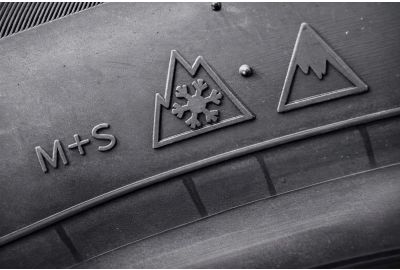
Yes, all-terrain tires are legal for winter driving in British Columbia, provided they meet the province's winter tire requirements. Your tires must display either the M+S (Mud and Snow) marking or the three-peak mountain snowflake symbol and have at least 3.5 mm of tread depth.
That means many all-terrain tires commonly fitted to trucks, Jeeps, and 4x4 vehicles can legally be used on BC's designated winter highways.
However, there is an important difference between a tire that meets the legal minimum and one that is well suited to snowy or icy driving conditions.
Here's what BC drivers should know before heading onto winter roads.
Are All-Terrain Tires Legal in BC During Winter?
All-terrain tires are permitted on BC's designated winter routes if they meet the province's requirements for sidewall markings and tread depth.
Under BC's winter tire regulations, eligible passenger-vehicle tires must have:
-
M+S (Mud and Snow) or the three-peak mountain snowflake marking on the sidewall.
-
At least 3.5 mm of remaining tread depth.
-
Proper fitment and a suitable configuration for the vehicle.
You do not necessarily need a dedicated winter tire to comply with BC's seasonal regulations.
For example, an all-terrain tire marked M+S with sufficient tread can meet the minimum legal requirement. A snowflake-rated all-terrain tire can also qualify.
The important thing is to check the actual markings on your tires rather than assuming every all-terrain model automatically qualifies.
What Do the M+S and Mountain Snowflake Symbols Mean?
The sidewall markings are the easiest way to determine whether your all-terrain tires meet BC's winter tire rules.
M+S (Mud and Snow)
M+S is a common marking found on many all-terrain and all-season tires.
In British Columbia, M+S meets the minimum legal winter-tire marking requirement.
However, M+S does not mean a tire has passed the same snow-traction testing required for the three-peak mountain snowflake designation.
An M+S all-terrain tire may work well for mixed road and off-road driving, but its traction on packed snow or ice will depend on the specific tire design, tread condition, and temperature.
Three-Peak Mountain Snowflake (3PMSF)
The three-peak mountain snowflake symbol indicates that a tire meets a standardized snow-traction performance test.
Some all-terrain tires carry this symbol, making them an appealing option for BC truck and Jeep owners who want year-round versatility with improved snow capability.
These tires can be useful for drivers who travel on highways, gravel roads, and occasional snowy routes.
That said, a snowflake-rated all-terrain tire is not necessarily equivalent to a dedicated winter tire, particularly on ice.
Both markings are legally accepted in BC, but the mountain snowflake designation provides additional information about tested snow traction.
How Much Tread Depth Do You Need?
BC requires a minimum tread depth of 3.5 mm for winter tires used on designated routes.
This requirement applies whether your tire is marked M+S or carries the three-peak mountain snowflake symbol.
Before winter travel, inspect your tires for:
-
Remaining tread depth, using a proper tread-depth gauge.
-
Uneven wear across the tread.
-
Cuts, cracks, or other visible damage.
-
Correct tire inflation pressure.
-
Approved winter markings on the sidewall.
Remember that 3.5 mm is the legal minimum, not necessarily the tread depth you want when driving through heavy snow or slush.
A worn all-terrain tire may still carry an approved marking but have considerably less traction than it did when new.
For regular mountain highway travel, evaluating tire condition before reaching the minimum is a practical decision.
When Are Winter Tires Required in BC?
BC's annual winter-tire requirements begin on October 1 on designated highways.
The seasonal dates are:
| Requirement period | Where it applies |
|---|---|
| October 1 – April 30 | Most designated winter tire routes, including many mountain highways |
| October 1 – March 31 | Selected designated routes with lower winter exposure |
These are established seasonal rules, not newly introduced regulations for 2026.
Winter tire requirements apply to signed routes, so drivers should check the highways they plan to travel rather than assuming every road has the same requirements.
For Lower Mainland drivers travelling to the Interior, ski destinations, or mountain recreation areas, this is particularly important.
Check the official BC Winter Tire and Chain-Up Routes before travelling.
You can also use DriveBC for current highway conditions, road closures, and travel advisories.
Are M+S All-Terrain Tires Good Enough for BC Winters?
M+S all-terrain tires can be legally compliant without providing the same winter traction as a dedicated winter tire.
The better choice depends on where you drive and what conditions you regularly encounter.
| Driving conditions | Practical tire consideration |
|---|---|
| Lower Mainland commuting | A compliant all-terrain tire may suit mixed conditions, but icy roads still require caution |
| Occasional mountain highway trips | Consider a snowflake-rated all-terrain tire and evaluate the forecast before travelling |
| Frequent snow and icy highway driving | Dedicated winter tires are generally the stronger choice |
| Gravel roads and year-round 4x4 use | Snowflake-rated all-terrain tires offer a useful balance of versatility and winter capability |
| Regular travel through mountain passes | Prioritize winter traction, tread condition, and tire suitability over legal compliance alone |
The distinction matters because an aggressive tread pattern does not automatically translate into better grip on icy pavement.
All-terrain tires are primarily designed for mixed surfaces. Dedicated winter tires use tread designs and rubber compounds developed specifically for cold-weather conditions.
For frequent snow, ice, and freezing temperatures, that difference can affect braking and cornering performance.
Does Four-Wheel Drive Change BC's Winter Tire Requirements?
No. Driving a four-wheel-drive truck or Jeep does not exempt you from BC's winter tire laws.
Your tires still need the approved marking and minimum tread depth when travelling on designated routes.
Four-wheel drive can improve traction when accelerating, but it doesn't eliminate the need for adequate grip when braking or steering.
BC recommends four evenly matched winter tires. The province's passenger-vehicle rules require at least two matching winter tires on the primary drive axle, including for 4x4 vehicles, but a properly matched set of four is the preferred approach.
This is especially important for modified trucks and Jeeps, where tire size, load rating, wheel fitment, and suspension setup should all be considered.
How to Check If Your All-Terrain Tires Meet BC's Winter Rules
Before your next winter trip, follow this quick checklist:
-
Find the sidewall marking. Look for M+S or the three-peak mountain snowflake symbol.
-
Measure the tread depth. Confirm that the tire has at least 3.5 mm of remaining tread.
-
Inspect tire condition. Look for uneven wear, damage, or other concerns.
-
Check your planned route. Confirm whether winter tire requirements apply and when they end.
-
Consider actual driving conditions. A legally compliant tire may still be poorly suited to severe snow or ice.
If you're unsure about your current setup, a tire inspection or fitment discussion can help determine whether your tires are appropriate for your vehicle and driving habits.
Frequently Asked Questions
Can I use M+S all-terrain tires on the Coquihalla Highway?
Yes. M+S all-terrain tires meet BC's minimum winter-tire marking requirement when they have at least 3.5 mm of tread depth. However, the Coquihalla can experience significant snowfall and icy conditions. Dedicated winter tires or suitable three-peak mountain snowflake-rated tires may be a better choice depending on the weather and frequency of travel.
Do all all-terrain tires have the mountain snowflake symbol?
No. Some all-terrain tires are marked only M+S, while others carry both M+S and the three-peak mountain snowflake symbol. Check the sidewall of your specific tire. The mountain snowflake marking indicates that the tire has passed a standardized snow-traction test, which the M+S marking alone does not establish.
Can I drive with all-terrain tires year-round in BC?
Yes, many all-terrain tires are intended for year-round use. For winter travel on designated BC highways, they must meet the applicable marking and tread-depth requirements. Whether they provide adequate winter traction depends on the tire model, its condition, and the conditions you drive in.
Are winter tires mandatory throughout Vancouver and the Lower Mainland?
BC's seasonal winter tire requirements apply to designated, signed highways rather than every local street in Vancouver or the Lower Mainland. However, many routes leading out of the region have winter tire requirements. Drivers should check their planned highway route and prepare for changing conditions, particularly when travelling inland or to higher elevations.
Final Thoughts: Legal Doesn't Always Mean Ideal
All-terrain tires can be completely legal for winter driving in BC.
If your tires carry the M+S or three-peak mountain snowflake marking and have at least 3.5 mm of tread, they can satisfy the province's minimum winter tire requirements on designated routes.
But legal compliance is only one part of choosing the right tires.
For BC truck and Jeep owners who regularly encounter snow, ice, and mountain highway conditions, tire performance should matter just as much as the sidewall marking.
A snowflake-rated all-terrain tire can offer a useful balance between daily driving and off-road capability. For drivers who spend significant time on icy winter roads, dedicated winter tires may be the more appropriate setup.
Not sure whether your current all-terrain tires are suitable for BC winter driving?
The team at North Shore Offroad can help you review your wheel and tire options, confirm vehicle-specific fitment, and discuss mounting, balancing, and seasonal tire changeovers.
Contact North Shore Offroad or visit our BC locations to talk about the right tire setup for your truck or Jeep.


