
How to Choose the Right Winch for Your Truck or Jeep
Choosing a recovery winch starts with capacity: multiply your vehicle’s Gross Vehicle Weight Rating, or GVWR, by 1.5 to estimate the minimum pulling rating. From there, compare synthetic rope and steel cable, confirm bumper and mounting compatibility, and choose controls and features that suit your typical off-road use.
A winch is only one part of a safe recovery setup. Proper recovery points, rigging equipment, installation, inspection, and winching technique matter just as much as the number printed on the winch.
How to Choose a Winch: Quick Takeaway
| Buying factor | What to look for |
|---|---|
| Pulling capacity | At least 1.5 times the vehicle’s GVWR |
| Rope type | Synthetic for lighter, easier handling; steel for strong abrasion resistance |
| Vehicle fitment | Compatible bumper, winch plate, bolt pattern, dimensions, and fairlead |
| Electrical requirements | Suitable battery, charging system, wiring, and cable routing |
| Controls | Wired, wireless, or both, depending on the winch |
| Typical use | Match the setup to mud, snow, rocks, overlanding, or utility work |
| Installation | Secure mounting, correct wiring, accessible controls, and unobstructed airflow |
| Recovery equipment | Rated shackles, tree strap, line damper, gloves, and recovery points |
What Is a Recovery Winch?
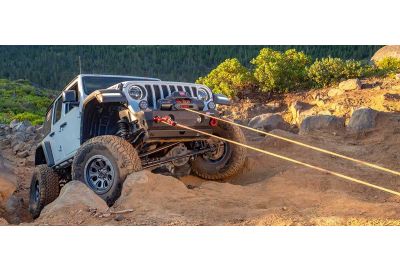
A vehicle recovery winch is a powered pulling device mounted to a suitable bumper or winch plate. It winds rope or cable around a drum to help pull a stuck vehicle toward a secure anchor point.
Most truck and Jeep recovery winches are electric and draw power from the vehicle’s battery. They are intended for controlled pulling not for lifting people, suspending loads, or replacing proper recovery points.
How to Size a Winch for Your Vehicle
The widely used sizing guideline for trucks and SUVs is:
GVWR × 1.5 = minimum recommended pulling capacity
WARN uses this formula in its vehicle winch guidance and specifies that GVWR not curb weight is the correct starting point. GVWR is generally listed on the driver’s door-area certification label and represents the maximum permitted operating weight of the vehicle, including occupants, fuel, cargo, and installed equipment.
For example, consider a vehicle with a 4,500-pound GVWR:
4,500 × 1.5 = 6,750 pounds
Because common winch ratings increase in set increments, the owner would move up to the next suitable capacity rather than selecting a winch below the calculated minimum. In this example, that would generally mean considering an 8,000-pound-or-higher model, subject to vehicle and mounting compatibility.
Why you should not size a winch using curb weight
Curb weight does not account for passengers, camping equipment, tools, armour, aftermarket bumpers, cargo, or other equipment added to the build. A vehicle that looks relatively light on a factory specification sheet can be considerably heavier when prepared for a weekend away.
Use the actual GVWR from the vehicle label and consider how the vehicle is equipped. Do not subtract cargo capacity or estimate based only on what the vehicle normally weighs on an empty commute.
Is a larger winch always better?
Moving modestly above the minimum can provide a useful capacity buffer, but the largest winch that fits is not automatically the right choice. Larger units may add weight, require more mounting space, place greater demands on the electrical system, and cost more.
The goal is adequate capacity in a winch that fits the vehicle and mounting system properly.
Synthetic Rope vs. Steel Cable
Synthetic rope and steel cable can both work for off-road recovery. The better option depends on handling preferences, maintenance habits, mounting hardware, and the terrain around which the line will be used.
| Line type | Advantages | Trade-offs | Often suits |
|---|---|---|---|
| Synthetic rope | Lightweight, flexible, easy to handle, does not develop steel burrs, stores less potential energy | More vulnerable to abrasion, heat, contamination, and UV exposure; requires inspection and care | Trail drivers, overland builds, and owners prioritizing easier handling and lower front-end weight |
| Steel cable | Strong abrasion resistance, durable around rough surfaces, generally lower initial cost | Heavy, can kink or develop sharp burrs, harder to handle, stores more potential energy | Utility work and users who regularly operate around abrasive surfaces |
When synthetic rope makes sense
Synthetic rope is popular on recreational off-road builds because it is light, flexible, and easier to carry or reposition during a recovery. It does not develop the sharp wire burrs associated with aging steel cable.
It also stores less potential energy than steel, which can reduce but not eliminate the hazard associated with a line failure. A broken synthetic line may tend to fall rather than recoil as forcefully, but it must never be described or treated as harmless. Everyone should remain clear of a loaded line, and safe rigging practices still apply. WARN similarly advises that safety precautions are necessary with either line type.
Synthetic rope’s main weakness is abrasion. Jagged rocks, damaged fairleads, dirty fibres, and sharp recovery points can compromise the line. WARN identifies abrasion as a primary concern and recommends checking that the hawse fairlead is smooth and free of nicks.
When steel cable makes sense
Steel cable remains a practical option for users who value abrasion resistance or perform utility pulls around rough materials. It is less affected by UV exposure and may suit a winch that is used infrequently but maintained correctly.
Its trade-offs are weight and handling. Steel can rust, kink, bird’s-nest on the drum, and develop sharp burrs. Heavy gloves should always be worn when handling it. Because steel stores more energy under load, keeping people clear of the line and using proper recovery procedures are especially important.
Do not overlook the fairlead
The rope and fairlead must be compatible.
Synthetic rope is normally paired with a smooth hawse fairlead. Steel cable is commonly paired with a roller fairlead. A scratched or damaged fairlead that previously carried steel cable may abrade synthetic fibres, so converting an existing setup requires more than simply swapping the line.
Always follow the winch and rope manufacturer’s installation requirements.
Check Mounting and Bumper Compatibility
A winch needs more than enough pulling capacity. It must physically fit the vehicle’s bumper or winch plate.
Before ordering, confirm:
- The bumper or mounting plate is designed to accept a winch
- The winch’s mounting pattern matches the plate
- The winch body and control pack fit within the available space
- The fairlead opening and line type are compatible
- The clutch lever remains accessible
- Wiring can be routed away from heat, sharp edges, and moving parts
- The installation does not obstruct required cooling airflow or vehicle systems
Control packs can sometimes be relocated to solve clearance issues, but the required parts and permissible configuration vary by winch. Confirm the specific product instructions rather than assuming a universal fit.
A bumper that looks winch-ready is not necessarily rated or drilled for every winch. Vehicle-specific fitment should be checked before purchase.
Consider Controls, Electrical Demand, and Serviceability
An electric recovery winch can draw substantial current while working under load. Proper cable sizing, secure connections, battery condition, and charging-system performance are essential.
Compare these features when shopping:
Wired and wireless controls
A wired remote provides a direct control connection and can be useful when wireless operation is unavailable or undesirable. A wireless remote lets the operator choose a safer viewing position, provided they remain within the manufacturer’s operating limits and maintain communication with anyone assisting.
Some winches include both methods.
Clutch access
The clutch allows the line to be pulled from the drum for rigging. It should remain accessible after the bumper and winch are installed. A buried clutch lever can make an otherwise clean installation frustrating on the trail.
Weather protection
BC vehicles may encounter rain, mud, road spray, snow, and repeated freeze-thaw cycles. Review the manufacturer’s stated sealing or environmental rating, but remember that no rating replaces inspection and maintenance.
Parts and service support
Winch line, contactors, remotes, hooks, fairleads, and electrical components are wear or service items. Product support and replacement-part availability can matter as much as headline features, especially for equipment expected to remain on the vehicle for years.
Match the Winch to Your Off-Road Use
The right setup depends on where and how the vehicle travels.
Best for regular trail use: A correctly sized winch with synthetic rope can reduce front-end weight and make line handling easier during repeated recoveries.
Best for rocky or abrasive working conditions: Steel cable may offer an advantage where the line frequently contacts rough surfaces, though a properly rigged line should still be protected from sharp edges.
Best for overlanding: Prioritize dependable controls, weather-resistant installation, accessible service components, and a complete recovery kit. Remote travel makes inspection and preparation particularly important.
Best for snow and mud: Adequate capacity matters because suction, slope, and resistance can raise the effort required to move the vehicle. A snatch block or recovery ring may help change direction or create a mechanical advantage when used in accordance with its rating and instructions.
Best for occasional emergency use: Choose a line material you are prepared to inspect and maintain. Equipment that remains untouched for years should be checked and operated periodically rather than assumed to be ready.
Do You Need Professional Winch Installation?
Professional installation can help ensure the winch is mounted securely, wired correctly, paired with the appropriate fairlead, and positioned so its controls remain usable.
Installation becomes especially important when the job involves:
- An aftermarket winch bumper
- Hidden or tight-clearance mounting
- Control-pack relocation
- High-current battery wiring
- Custom cable routing
- Bumper trimming or related accessory installation
- Integration with auxiliary lighting or other electrical equipment
North Shore Offroad provides winch and bumper installation support for truck and Jeep builds.
Recovery Equipment to Carry With a Winch
A winch should be supported by rated recovery equipment appropriate to the vehicle and recovery plan.
A practical kit may include:
- Rated vehicle recovery points
- Tree-saver strap
- Rated bow shackles or compatible soft shackles
- Winch-line damper
- Heavy gloves
- Snatch block or recovery ring
- Recovery strap or kinetic rope for suitable situations
- Recovery boards
- Shovel
- Line sleeve or abrasion protection
- Basic hand tools
Inspect every component before use. WARN advises replacing winch rope that is frayed, kinked, sliced, or otherwise compromised. It also instructs users to keep clear of the line, verify the anchor, and maintain the required number of wraps on the drum.
WARN and RFX Winches at North Shore Offroad
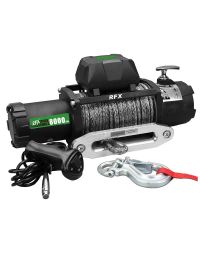
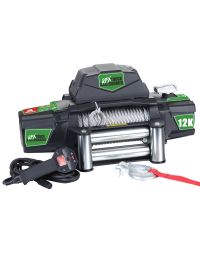
North Shore Offroad offers WARN and RFX Truck Accessories winches for truck, Jeep, and 4x4 recovery applications. Its current winch category lists both brands, with line and capacity options varying by product.
Rather than choosing by brand or pulling-capacity number alone, start with:
- Your vehicle’s GVWR
- Your bumper or mounting system
- Your preferred rope material
- Your typical recovery environment
- Your installation and electrical requirements
The NSOR team can help check these factors against your vehicle and build plans without assuming that one setup suits every truck or Jeep.